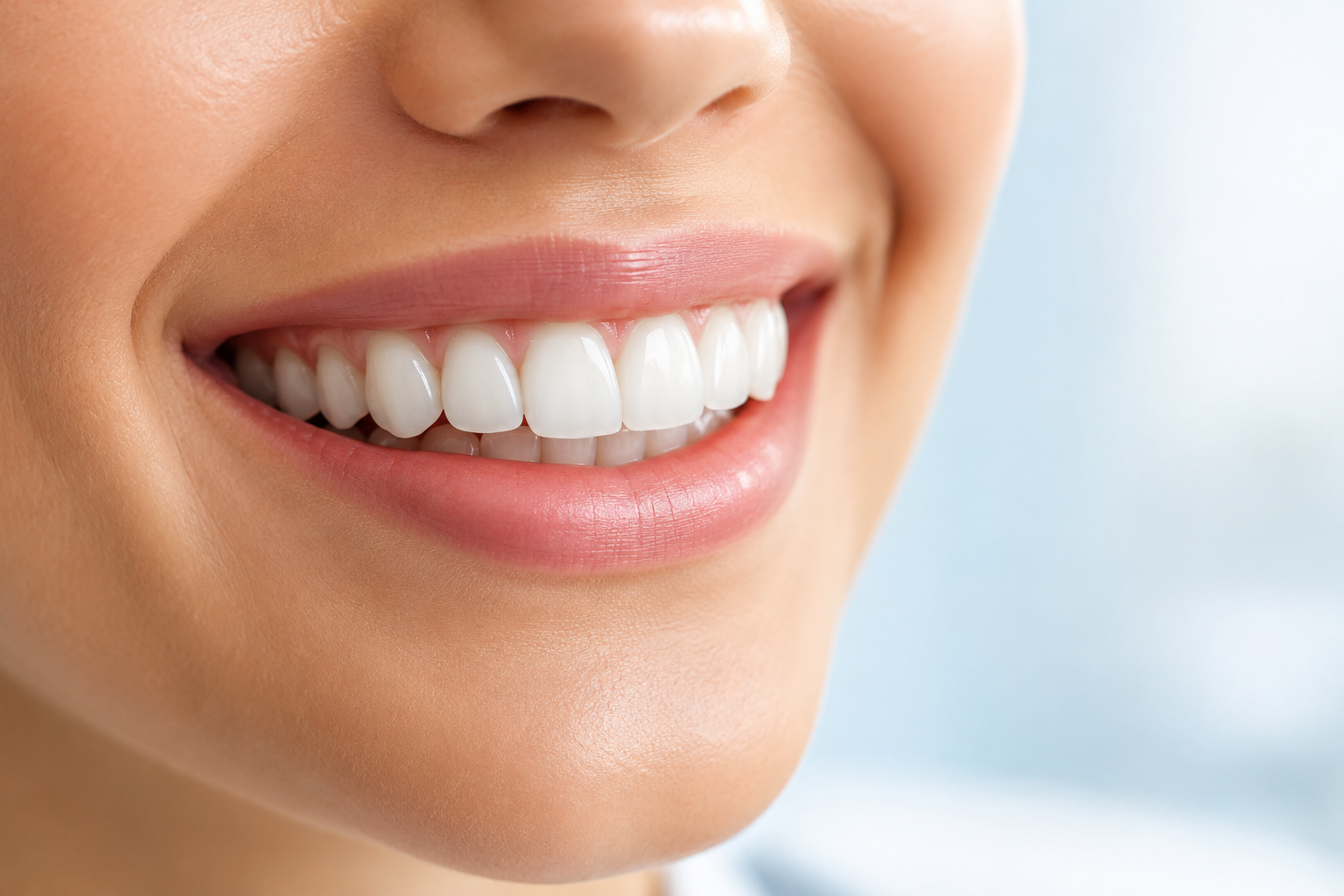
E-max is a lithium disilicate ceramic material widely used in aesthetic dentistry for veneers, crowns and certain other restorations.
One of its main advantages is its ability to reproduce the translucency and light transmission of natural tooth structure. For this reason, E-max restorations are often considered in areas where aesthetics are particularly important, especially in the front teeth.
However, E-max is not automatically the best material for every tooth. The choice between E-max, zirconia and other restorative materials should be based on the condition of the tooth, bite forces, available tooth structure and the type of restoration required.
What Is E-max?
E-max is the commercial name commonly associated with lithium disilicate glass-ceramic restorations.
Lithium disilicate is designed to combine:
- high aesthetic potential,
- natural translucency,
- good strength,
- accurate fit,
- and the ability to be bonded adhesively to tooth structure.
It can be used for different types of restorations depending on the clinical situation. These may include:
- veneers,
- full crowns,
- partial crowns,
- inlays,
- onlays,
- and selected other ceramic restorations.
What Are E-max Veneers?
E-max veneers are thin ceramic restorations placed primarily on the front surface of the teeth.
They may be used to improve certain aesthetic concerns such as:
- tooth colour,
- minor shape irregularities,
- small gaps between teeth,
- worn or chipped edges,
- asymmetry between front teeth.
The amount of tooth preparation required depends on the existing tooth position, colour, shape and the planned final result.
In selected cases, minimal-preparation or very conservative approaches may be possible. However, not every patient is suitable for a no-preparation veneer.
What Are E-max Crowns?
An E-max crown covers a larger portion of the tooth than a veneer.
Crowns may be considered when a tooth has:
- extensive structural loss,
- a large restoration,
- fracture,
- significant wear,
- or another condition requiring greater coverage.
Because E-max can provide both strength and high aesthetic quality, it may be particularly useful in visible areas of the mouth when the clinical conditions are suitable.
Why Does E-max Look Natural?
Natural teeth are not completely opaque. Light enters and interacts with the enamel and dentine before being reflected.
Lithium disilicate ceramics can reproduce some of these optical characteristics more effectively than highly opaque restorative materials.
This can help create:
- natural translucency,
- depth of colour,
- smoother transitions between the restoration and surrounding teeth,
- and a more tooth-like appearance.
The final aesthetic result also depends heavily on shade selection, restoration thickness, the colour of the underlying tooth and laboratory work.
What Are the Advantages of E-max Restorations?
Potential advantages include:
- high aesthetic quality,
- natural translucency,
- good colour stability,
- smooth ceramic surface,
- good compatibility with surrounding soft tissues,
- ability to use adhesive bonding techniques,
- conservative treatment options in suitable cases.
However, the advantages of E-max depend on correct case selection and appropriate preparation design.
Is E-max Strong?
Lithium disilicate ceramics have relatively high strength compared with many traditional glass-ceramic materials.
This allows E-max to be used for several types of restorations.
However, strength should not be evaluated in isolation.
Factors such as restoration thickness, tooth preparation, bonding technique, bite forces, bruxism and the position of the tooth all influence long-term performance.
For patients with very high bite forces or specific functional risks, another restorative material may sometimes be more appropriate.
E-max or Zirconia: Which Is Better?
There is no single material that is best for every patient.
E-max and zirconia have different characteristics.
E-max
- Excellent translucency
- High aesthetic potential
- Adhesive bonding capability
- Suitable for veneers and many anterior restorations
Zirconia
- Very high mechanical strength
- Wide range of indications
- Suitable for areas with higher functional loads
- Used in various crown and bridge designs
Modern translucent zirconia materials have also improved significantly in appearance.
The choice between E-max and zirconia should therefore depend on the tooth, restoration type, aesthetic expectations and functional demands.
Is E-max Suitable for Front Teeth?
E-max is commonly used in the anterior region because of its aesthetic properties.
It can be particularly useful when the treatment goal is to reproduce the optical characteristics of natural teeth.
However, the colour of the underlying tooth is important.
If a tooth is severely discoloured, very dark or has a metal post underneath, additional opacity may be required. In these situations, material selection becomes more complex.
Can E-max Be Used on Back Teeth?
In selected cases, yes.
E-max crowns and partial restorations may be used on posterior teeth when there is sufficient material thickness and appropriate occlusal conditions.
However, posterior teeth are exposed to higher chewing forces.
Patients with severe bruxism, heavy bite forces or limited restorative space may require a different material or treatment design.
The decision should be made individually.
How Much Tooth Needs to Be Removed for E-max?
The amount of tooth preparation depends on the type of restoration.
A veneer generally requires less tooth reduction than a full crown.
In some veneer cases, preparation can be minimal. In other cases, more reduction is necessary to:
- correct tooth position,
- create sufficient ceramic thickness,
- mask discolouration,
- or achieve the planned contour.
The goal should be to preserve as much healthy tooth structure as reasonably possible while creating sufficient space for the restoration.
Can E-max Veneers Be Done Without Cutting the Teeth?
In selected cases, very minimal or no-preparation veneers may be possible.
However, this is not suitable for everyone.
If the teeth are already prominent, adding ceramic without preparation can make them look bulky.
Tooth position, existing enamel, colour, shape and the desired final result must all be evaluated before deciding whether a no-preparation approach is appropriate.
How Is E-max Treatment Performed?
Treatment generally includes several stages.
- Examination and Planning — The teeth, gums, bite and aesthetic expectations are evaluated. Photographs, digital scans or impressions may be used during planning.
- Tooth Preparation — If preparation is required, the tooth is shaped according to the planned restoration. The amount of preparation depends on whether the restoration is a veneer, partial crown or full crown.
- Digital Scan or Impression — The prepared teeth are recorded with a digital scanner or conventional impression. This information is sent to the dental laboratory.
- Temporary Restorations — Temporary restorations may be used while the final ceramic restorations are being produced, depending on the case.
- Try-In and Cementation — The final restorations are evaluated for fit, colour, shape, contact points and bite. After the necessary checks, they are bonded or cemented using the appropriate technique.
How Long Does E-max Treatment Take?
Treatment time depends on:
- the number of teeth,
- whether additional treatments are required,
- the laboratory workflow,
- and the complexity of the case.
Many cases require more than one appointment. The exact treatment schedule should be determined after examination and treatment planning.
How Long Do E-max Veneers and Crowns Last?
There is no fixed lifespan that can be guaranteed.
The longevity of ceramic restorations depends on factors such as:
- oral hygiene,
- bite forces,
- bruxism,
- amount of remaining tooth structure,
- bonding quality,
- restoration design,
- diet and habits,
- and regular dental maintenance.
Well-maintained ceramic restorations can function for many years, but they are not permanent or maintenance-free.
Can E-max Restorations Stain?
The ceramic surface itself is highly resistant to colour change.
However, staining can occur around restoration margins or on natural tooth surfaces over time due to plaque, smoking, coffee, tea and other dietary factors.
Good oral hygiene and regular professional maintenance remain important.
Can E-max Break?
Like any ceramic material, E-max can fracture under excessive load.
Risk factors may include:
- severe bruxism,
- trauma,
- insufficient ceramic thickness,
- inappropriate bite contacts,
- or biting very hard objects.
For patients who grind or clench their teeth, a protective night guard may be recommended depending on the clinical situation.
E-max Veneers and Crowns in Bursa, Turkey
The success of aesthetic ceramic treatment depends on choosing the right material for the individual tooth rather than selecting a material based only on its name.
At Ante Dental Clinic in Nilüfer, Bursa, the teeth, bite, gum condition and aesthetic requirements are evaluated before planning ceramic restorations.
Depending on the clinical situation, E-max, zirconia or another restorative option may be considered.
The objective is to preserve healthy tooth structure whenever possible while creating a restoration that is functional, maintainable and naturally integrated with the surrounding teeth.
Frequently Asked Questions
Is E-max the same as porcelain?
E-max is a type of lithium disilicate glass-ceramic. It is commonly described as a ceramic or porcelain restoration, but its material composition and properties differ from traditional feldspathic porcelain.
Is E-max better than zirconia?
Not universally. E-max may offer advantages in translucency and aesthetics, while zirconia may provide advantages in certain high-load situations. The correct choice depends on the individual case.
Can E-max be used for veneers?
Yes. E-max is widely used for ceramic veneers because of its aesthetic properties and adhesive bonding capability.
Can E-max be used for crowns?
Yes. It can be used for crowns in appropriately selected teeth.
Do E-max teeth look artificial?
Well-planned E-max restorations can closely reproduce the appearance of natural teeth. The final result depends on material selection, shade, restoration design, underlying tooth colour and laboratory work.
Do E-max veneers require tooth preparation?
Sometimes. Preparation may be minimal in selected cases, but some teeth require more preparation depending on their position, colour and the planned final contour.
Is E-max suitable for people who grind their teeth?
It may be possible in selected cases, but severe bruxism increases the mechanical risk for ceramic restorations. Material choice and protective measures should be considered individually.
Conclusion
E-max is a highly aesthetic lithium disilicate ceramic that can be used for veneers, crowns and other restorations in appropriately selected cases.
Its translucency and optical properties make it particularly useful when a natural appearance is a priority.
However, E-max is not automatically the ideal material for every tooth. Tooth position, remaining structure, bite forces, aesthetic requirements and the type of restoration should all be considered before choosing between E-max, zirconia or another restorative material.
Please note: This article is intended for general information and does not replace a dental examination, diagnosis or personalised treatment plan.