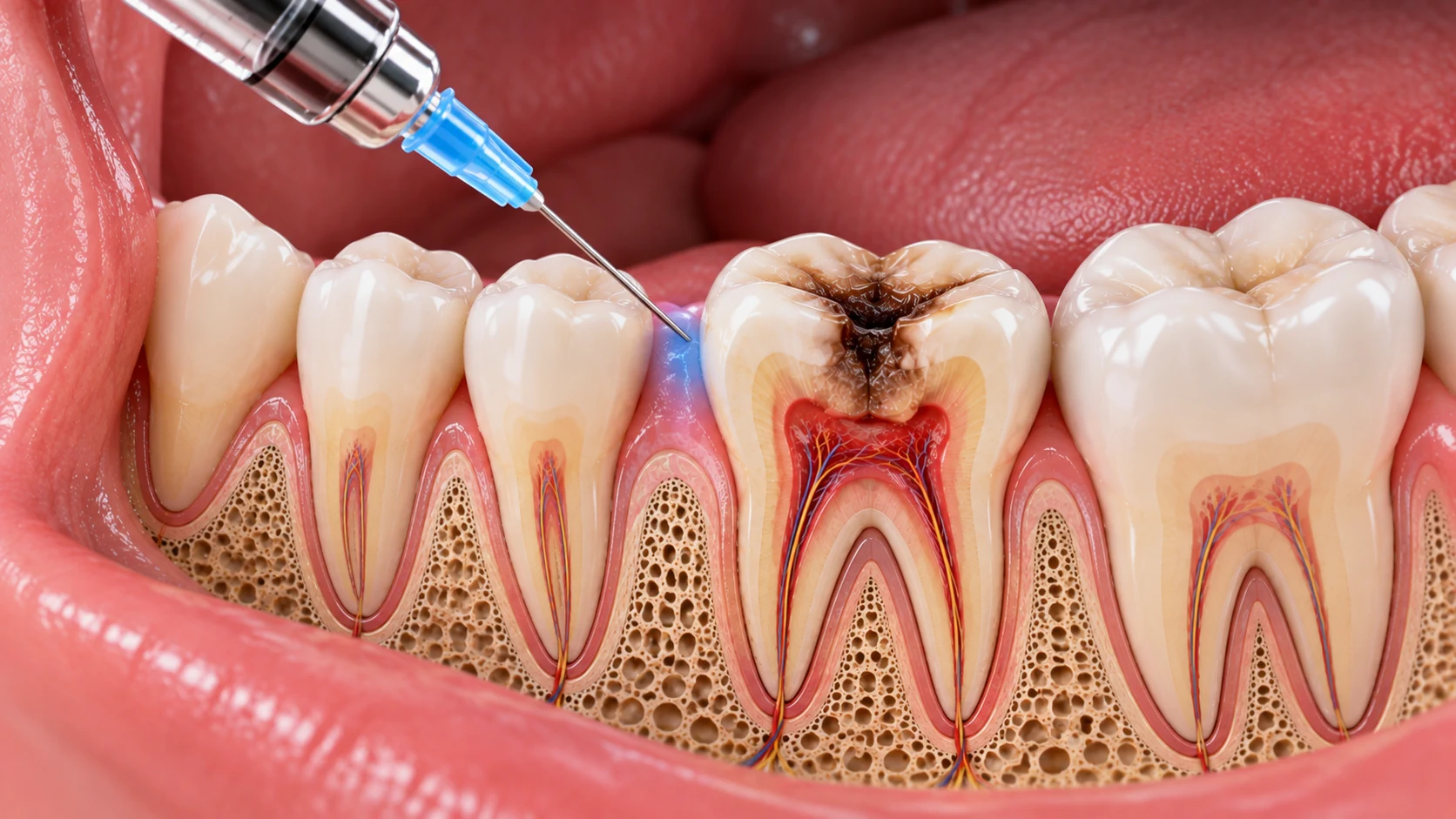
Local anaesthesia used in dental treatment is administered to prevent the sensation of pain during the procedure. However, in some cases adequate numbness may not be achieved even though anaesthesia has been given.
So, why does dental anaesthesia sometimes fall short?
1. Inflammation in the Tooth
The success of local anaesthesia may be reduced, particularly in teeth with severe pulpal inflammation.
Chemical mediators released during inflammation can increase the sensitivity of nerve endings and lower their activation threshold to painful stimuli. In addition, physiological changes in the nerve tissue can negatively affect the effectiveness of local anaesthesia.
This is particularly important in lower molars with symptomatic irreversible pulpitis.
2. Pain, Anxiety and Stress
In patients experiencing severe toothache, the nervous system's sensitivity to painful stimuli may increase.
When intense anxiety and stress are added to this, the patient's pain perception may increase and their pain tolerance may decrease.
However, anxiety does not directly cause the local anaesthetic drug to become ineffective. Pain perception and the pharmacological effectiveness of anaesthesia are different concepts.
3. Anatomical Differences in the Nerves
Not everyone's jaw and nerve anatomy is the same.
Particularly in lower molars, standard anaesthetic techniques may not always be sufficient because of the anatomical position of the nerves, accessory nerve branches and individual variations.
4. Taking Ibuprofen Before the Procedure
Some clinical studies show that taking ibuprofen before the procedure may increase the success of local anaesthesia, particularly in lower molars with symptomatic irreversible pulpitis.
Ibuprofen may help to reduce pain sensitivity by decreasing inflammation-related prostaglandin synthesis.
However, this approach does not produce the same result in every patient, and it does not need to be used routinely before all dental treatments.
The use of ibuprofen should be planned by the dentist, taking into account the patient's general health, the medications they take and any possible contraindications.
5. Anaesthetic Technique and Waiting Time
The area where the anaesthetic is administered, the technique used and the time needed for the drug to take effect can also influence the success of treatment.
Particularly in inflamed lower molars, a standard inferior alveolar nerve block may not always provide adequate pulpal anaesthesia.
In such cases, supplementary techniques such as additional infiltration, intraligamentary or intraosseous anaesthesia may be used.
What Should Be Done If the Tooth Does Not Go Numb?
If pain is felt during treatment, the procedure should be stopped and the adequacy of the anaesthesia should be reassessed.
Depending on the patient's clinical condition, the dentist may administer additional anaesthesia or choose different techniques.
Remember: If the first anaesthetic injection is not sufficient, this does not mean that your dental treatment will necessarily be painful.
At Ante Dental Clinic in Nilüfer, Bursa, dental treatments are planned by evaluating each patient's clinical condition and individual needs.