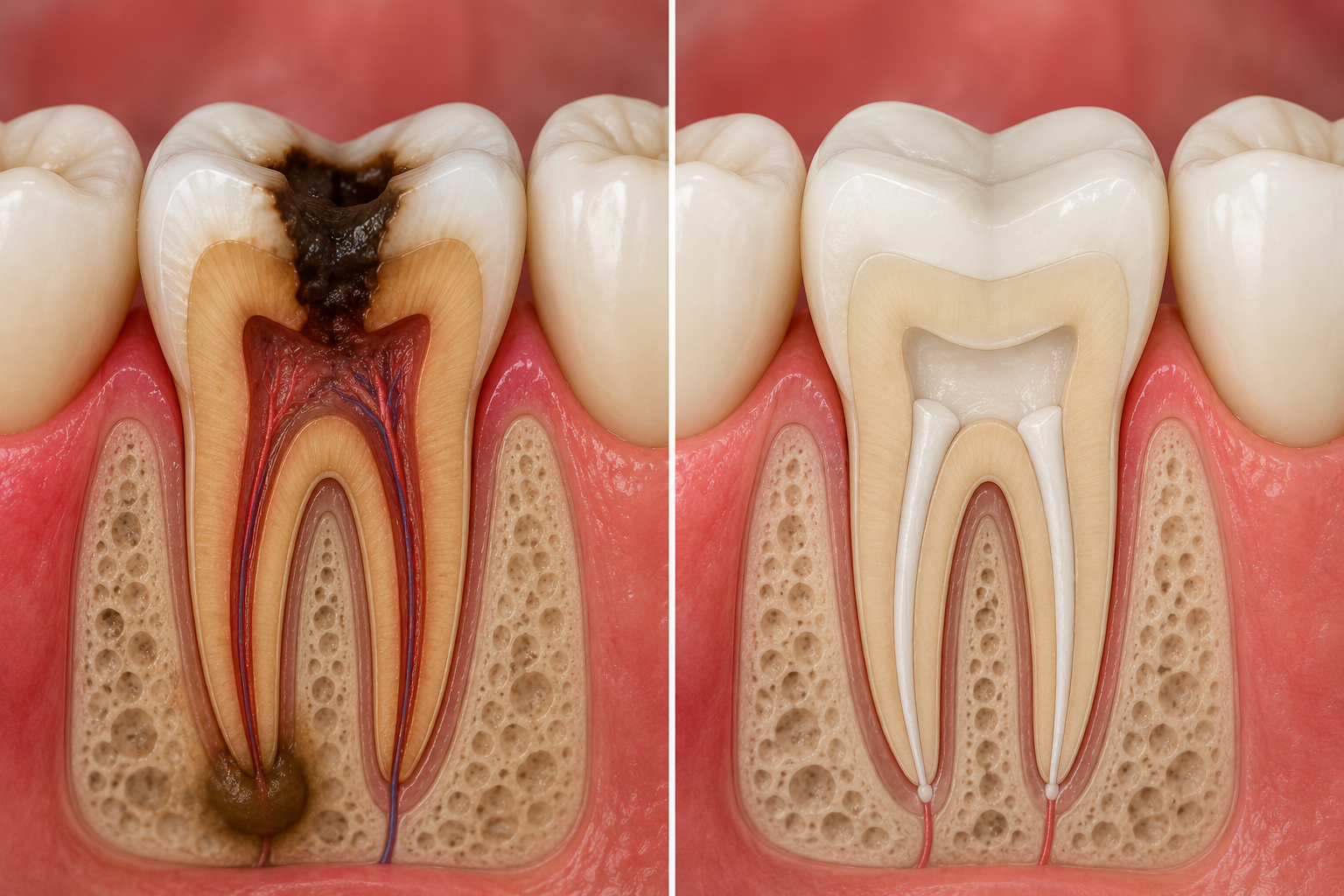
One of the most common concerns patients have before root canal treatment is whether the procedure will hurt. This concern can be particularly strong for people who have had a painful or stressful dental experience in the past.
Today, modern local anaesthetics and anaesthetic techniques allow root canal treatment to be performed comfortably for most patients, without pain during the procedure.
Does a Root Canal Hurt During Treatment?
Before root canal treatment begins, the tooth and surrounding tissues are numbed with local anaesthesia. Once adequate anaesthesia has been achieved, the dentist accesses the inside of the tooth, removes the inflamed or infected pulp tissue, and cleans the root canal system.
When the tooth is properly anaesthetised, patients may notice pressure, movement or vibration during treatment, but they should not normally experience sharp pain.
In some teeth with significant inflammation or infection, achieving profound anaesthesia can be more difficult. In these situations, additional anaesthetic techniques may be used to improve comfort.
Why Do People Think Root Canal Treatment Is Painful?
Root canal treatment has historically had a reputation for being painful. Part of this perception comes from previous negative dental experiences.
A patient who underwent dental treatment in the past without adequate anaesthesia may understandably expect the same experience again.
However, local anaesthetic agents, anaesthetic techniques and the instruments used in modern endodontic treatment have developed considerably over the years.
A painful dental experience from many years ago does not necessarily mean that root canal treatment today will also be painful.
Is Pain Normal After Root Canal Treatment?
Some sensitivity after root canal treatment can be normal.
For a few days, the treated tooth may feel sensitive particularly when:
- biting down,
- chewing,
- pressure is applied around the tooth.
This sensitivity is generally related to temporary irritation of the tissues surrounding the root and usually decreases gradually.
Teeth that had severe pain, an abscess or significant inflammation around the root before treatment may sometimes remain sensitive for longer.
How Long Does Pain Last After a Root Canal?
For most patients, post-treatment sensitivity gradually improves within a few days.
However, increasing pain, swelling, an inability to bite on the tooth or symptoms that persist should be evaluated by a dentist.
Persistent pain does not always mean that the root canal treatment has failed, but it does require clinical assessment to determine the cause.
How Many Appointments Does Root Canal Treatment Take?
Some root canal treatments can be completed in a single appointment, while others may require more than one visit.
The number of appointments depends on several factors, including:
- the anatomy of the tooth and its root canals,
- the extent of infection,
- whether the tooth has previously received root canal treatment,
- the complexity of the root canal system.
For this reason, treatment time and the number of appointments can vary from one tooth to another.
The Purpose of Root Canal Treatment Is to Relieve Pain
It is useful to remember that root canal treatment is not primarily a procedure that causes toothache. In many cases, it is performed because the pulp inside the tooth has become inflamed or infected and is already causing pain.
The aim is to remove the damaged or infected tissue, disinfect the root canal system and preserve the natural tooth whenever possible.
Root Canal Treatment in Bursa, Turkey
Whether a tooth requires root canal treatment cannot be determined by pain alone. A clinical examination and, when necessary, dental X-rays are used to evaluate the pulp and the tissues surrounding the root.
At Ante Dental Clinic in Nilüfer, Bursa, each tooth is assessed individually before root canal treatment, and patients are informed about the recommended treatment and what they can expect during the procedure.
Please note: This article is intended for general information and does not replace a dental examination, diagnosis or personalised treatment plan.
Frequently Asked Questions
Does a root canal hurt during treatment?
When the tooth is properly anaesthetised, patients may notice pressure, movement or vibration during treatment, but should not normally experience sharp pain. In teeth with significant inflammation, additional anaesthetic techniques may be used.
Is pain normal after root canal treatment?
Some sensitivity for a few days after treatment is normal, particularly when biting or chewing. This usually decreases gradually. If pain increases or swelling develops, consult your dentist.
How long does pain last after a root canal?
Post-treatment sensitivity typically improves within a few days. Persistent or worsening pain, swelling or an inability to bite should be assessed by a dentist.
How many appointments does root canal treatment take?
Some root canals can be completed in a single visit, while others require more. This depends on canal anatomy, extent of infection and whether the tooth has been previously treated.